
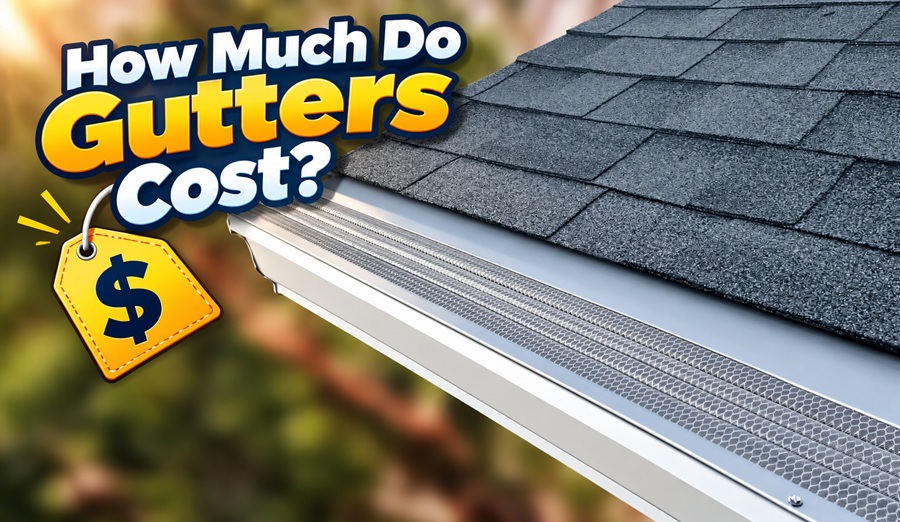
Gutters may not be the most exciting part of a home renovation, but they play an important role in protecting your property. When rainwater runs directly off the roof, it can erode landscaping, stain exterior walls, soak the soil around the foundation, and contribute to water problems near basements or crawl spaces. If you’re planning a renovation or replacing a failing drainage system, one of your first questions is likely how much do gutters cost?
For homeowners in the United States, a broad planning estimate for many professionally installed gutter systems is around $6 to $15 per linear foot, although basic vinyl options and premium materials can fall outside that range. Your actual price depends on the gutter material, roofline length, number of downspouts, building height, accessibility, and condition of the existing fascia. A reliable estimate should include more than the gutter channels themselves. Removal, disposal, brackets, corners, outlets, and drainage extensions can all influence the final bill.
Gutter Costs at a Glance
| Cost factor | What affects the price |
|---|---|
| Material | Vinyl, aluminum, steel, and copper have different costs |
| Roofline length | More linear footage requires more material |
| Building height | Multi-story installations may need additional equipment |
| Gutter style | Sectional and seamless systems differ in construction |
| Downspouts | Quantity, size, and placement affect the total |
| Roof complexity | Corners and unusual angles add labor |
| Existing gutters | Removal and disposal may cost extra |
| Fascia condition | Rot or structural damage may require repairs |
| Optional additions | Guards, screens, and extensions increase the budget |
Average Gutter Installation Costs
Gutter installation is usually estimated by linear footage, which measures the length of the roof edges where gutters will be fitted. The home’s floor area does not directly determine the amount required because roof overhangs, multiple levels, and architectural features affect the total.
The following are broad illustrative U.S. planning ranges, not live local quotes.
| Gutter type | Approximate installed cost per linear foot |
|---|---|
| Vinyl gutters | $3 to $8 |
| Aluminum sectional gutters | $6 to $12 |
| Seamless aluminum gutters | $7 to $15 |
| Steel gutters | $8 to $18 |
| Copper gutters | $20 to $40 or more |
Actual prices depend on product quality, labor rates, access, and the scope of work. Some quotes include standard downspouts and fittings, while others list them separately. Always check what is included before comparing contractors.
Example Cost Calculation
Suppose your home needs 180 linear feet of gutters and a contractor quotes $10 per linear foot. The basic calculation is:
180 × $10 = $1,800.
That figure may not include gutter guards, old-system removal, fascia repairs, or additional drainage work. A multi-story house with difficult access may also cost more to complete.
Use the calculation as a starting point, then request an itemized estimate. Confirm the measured footage and whether accessories are included.
How Gutter Material Affects the Price
Vinyl Gutters
Vinyl gutters are often among the lower-cost options. They are lightweight, do not rust like unprotected steel, and can be convenient for smaller or simpler buildings.
However, vinyl can become brittle or deform under certain weather conditions. Long-term performance depends on product quality, installation, sunlight exposure, and local temperature changes. Ask whether the selected product is appropriate for your climate before choosing it solely because it is inexpensive.
Aluminum Gutters
Aluminum is widely used because it combines relatively low weight with corrosion resistance and a broad choice of colors. It is available in sectional systems and seamless runs.
Sectional gutters use connectors at joints, while seamless systems reduce the number of joints along straight sections. Both still require correct installation around corners, outlets, and end caps.
Aluminum can dent from ladders, branches, and impacts. Compare product specifications and support requirements rather than selecting by color alone.
Steel Gutters
Steel gutters offer strength and may be appropriate where impact resistance is important. Depending on the product, they may use galvanized or other protective coatings to reduce corrosion.
Scratches, damaged coatings, and persistent moisture can lead to rust. Ask about coating quality, maintenance, and warranty terms before purchasing.
Copper Gutters
Copper is a premium option valued for its distinctive appearance and material characteristics. Over time, its surface may develop a natural patina.
Copper usually has a higher initial price and may require specialist installation and compatible fittings. It may suit architecturally distinctive homes, but it is not necessary for every building.
Sectional vs. Seamless Gutters
Sectional gutters are assembled from shorter lengths connected with joints. Seamless gutters are typically formed on-site into long runs, reducing the number of joints along straight sections.
| Feature | Sectional gutters | Seamless gutters |
|---|---|---|
| Construction | Multiple pieces joined together | Long runs formed to fit |
| Initial cost | Often lower | Often higher |
| Straight-run joints | More | Fewer |
| Repairs | Individual sections may be replaceable | Repairs may involve a longer section |
| Custom fitting | Depends on available sections | Formed for measured runs |
Seamless gutters can reduce the number of potential leak points, but they are not maintenance-free. Corners, outlets, and end caps still need proper installation. Sectional systems can be suitable for smaller projects or tighter budgets.
Compare the total installed cost and expected maintenance rather than assuming one style is always better.
What Increases Gutter Installation Costs?
Home Size and Roof Complexity
Longer roof edges generally require more material. However, corners, dormers, porches, and multiple roof levels can increase labor even when the total length is modest.
Ask the contractor to identify the measured footage on the estimate. If two quotes differ significantly, check whether they cover the same sections and include the same accessories.
Height and Accessibility
Installing gutters on a single-story home is often simpler than working several stories above ground. Steep terrain, fences, landscaping, and limited access can make material handling and safe positioning more difficult.
Ask whether scaffolding, lifts, or other access equipment is included in the quoted price.
Downspouts and Drainage
Downspouts carry water from the gutters to a suitable discharge point. Their quantity and placement should match the roof area and expected rainfall.
Extensions, splash blocks, and underground drainage connections may add cost. Water should be directed away from the foundation and should not create erosion, flooding, or hazards around entrances and walkways.
Gutter Guards
Gutter guards are designed to reduce the amount of debris entering the gutter. Their effectiveness depends on the product, roof conditions, and type of debris around the home.
Some guards reduce cleaning frequency but still require maintenance. Compare the purchase price and ongoing cleaning requirements before deciding whether they are worthwhile.
Gutter Replacement Costs
Replacing existing gutters can involve removing the old system, disposing of materials, inspecting the fascia, and repairing areas damaged by water exposure.
Fascia is the board or finishing surface along the roof edge where many gutter systems attach. If it is rotten or loose, new gutters may not remain secure. The damaged area should be repaired before installation.
Ask whether removal and disposal are included in the quote. Clarify how unexpected damage will be priced and approved so you are not surprised by additional charges during the job.
DIY Installation vs. Professional Installation
Some homeowners can install gutters on a small, accessible structure if they have suitable tools and experience. DIY work may reduce labor expenses, but the installation still requires accurate measurements, correct slope, secure fastening, and a safe drainage layout.
Professional installers bring experience with roof geometry, material compatibility, and access equipment. They may also be able to form seamless gutters on-site.
| Factor | DIY | Professional |
|---|---|---|
| Labor cost | Lower if tools are available | Includes installation labor |
| Time | Depends on experience | Often more efficient |
| Custom seamless gutters | Specialized equipment needed | Commonly available |
| Safety | Homeowner manages access risks | Trained crews should use appropriate safety procedures |
| Best fit | Small, accessible projects | Complex or elevated installations |
Falls from ladders and roofs can cause serious injuries. If the work involves difficult access or exceeds your experience, hiring a professional is the safer choice.
How to Get an Accurate Quote
Measure the roof edges that need gutters and note corners, downspout locations, and access restrictions. A contractor should verify the final measurements and assess whether the system has enough capacity for the roof and local rainfall.
Request quotes using the same material and style wherever possible. Ask each contractor to list materials, labor, downspouts, accessories, removal, disposal, and fascia repairs separately.
Check relevant experience, insurance, and local licensing requirements. A very low quote may omit necessary work or use unsuitable components. The aim is to compare the value and scope of each proposal, not simply the lowest number.
Conclusion
The answer to how much do gutters cost depends on the roofline, material, installation access, drainage requirements, and condition of the existing system. Basic installations may be relatively affordable, while large homes and premium materials can substantially increase the budget.
Start with accurate measurements, compare sectional and seamless systems, and choose a material suited to your climate. Make sure the quote includes the accessories needed to direct water away from the home.
A properly installed gutter system helps manage rainwater and reduce the risk of avoidable water damage. Detailed estimates and routine maintenance can help you balance initial cost with long-term performance.
Frequently Asked Questions
1. How much do gutters cost for an average house?
Costs vary by roofline, material, and region. A broad U.S. planning range for many installed systems is around $6 to $15 per linear foot, although some products fall outside that range.
2. Are seamless gutters more expensive?
They often cost more initially because they require specialized forming equipment. They have fewer joints along straight runs but still need proper installation and maintenance.
3. What is the cheapest gutter material?
Vinyl is often among the lower-cost choices. Its suitability depends on climate, product quality, and expected service life.
4. How much does gutter replacement cost?
The price depends on the new system, removal and disposal, access, and any fascia repairs. An itemized quote provides the clearest estimate.
5. Are gutter guards worth the money?
They may reduce cleaning frequency in some settings, but they do not eliminate maintenance. Consider the surrounding trees, debris type, product cost, and cleaning requirements.