Imagine arriving home after a long day and having the lights switch on automatically, the temperature adjust to your preference, and the front door lock securely behind you. You can check your security cameras from your phone, turn off forgotten lights while you’re away, or prepare your living room for movie night with a single command. These conveniences are no longer limited to luxury houses. With the right equipment and a sensible plan, many homeowners can introduce smart technology gradually and make everyday routines easier.
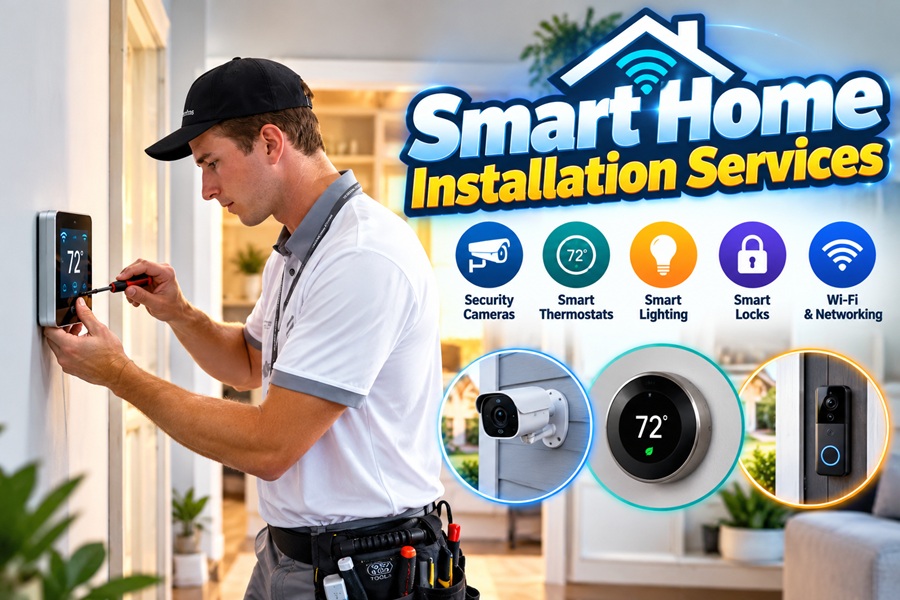
Smart home installation services help homeowners choose, install, connect, and configure devices that work together. These services can include smart lighting, thermostats, door locks, cameras, sensors, entertainment equipment, and complete home automation systems. Professional installation can be especially useful when equipment requires electrical work, network improvements, or integration between different brands. The goal isn’t to fill every room with gadgets. It’s to create a reliable system that solves real problems, fits your budget, and remains simple enough for everyone in the household to use.
Smart Home Installation Services at a Glance
| Service | Main purpose | Potential benefit |
|---|---|---|
| Smart lighting | Control lights through apps, schedules, or voice commands | Convenience and better lighting control |
| Smart security | Connect cameras, alarms, and sensors | Improved awareness of activity |
| Smart thermostats | Automate heating and cooling settings | Comfort and potential energy savings |
| Smart locks | Manage door access electronically | Convenient access management |
| Smart entertainment | Connect televisions and speakers | Easier control of media |
| Smart sensors | Detect movement, leaks, or environmental changes | Earlier alerts about selected problems |
| Network setup | Improve device connectivity | More reliable operation |
| Whole-home automation | Coordinate multiple devices | Simplified everyday routines |
What Do Smart Home Installation Services Include?
Smart home installation services can range from setting up one connected doorbell to designing an integrated system for an entire property. The work generally begins with a conversation about your needs, existing equipment, internet connection, budget, and preferred control method.
An installer may assess where cameras should be positioned, whether your Wi-Fi reaches outdoor areas, and whether your electrical switches can support the smart products you want. After selecting compatible equipment, the installer configures the devices, connects them to the relevant applications, tests their operation, and explains how to manage them.
Some companies also provide troubleshooting, maintenance, equipment upgrades, and ongoing support. Ask exactly what the service includes because installation packages differ. A quote for smart cameras, for example, may or may not include storage subscriptions, additional wiring, network upgrades, or repairs to existing electrical components.
Smart Lighting Installation
Smart lighting allows you to control compatible bulbs, switches, and fixtures through a phone, voice assistant, schedule, or automation routine. You might set porch lights to turn on around sunset or dim living room lights automatically in the evening.
A professional becomes particularly helpful when replacing conventional wall switches or connecting multiple lighting circuits. Electrical compatibility matters, and some smart switches require specific wiring arrangements. Electrical modifications should be handled by a qualified professional.
Smart Security Installation
Smart security systems may include video doorbells, indoor and outdoor cameras, motion detectors, window sensors, and connected alarms. Correct placement helps improve coverage and reduce unnecessary notifications.
An installer can assess camera angles, Wi-Fi strength, recording options, and account settings. Before purchasing equipment, check whether recordings are stored locally or in the cloud and whether ongoing subscriptions are required. Smart security improves monitoring, but it does not guarantee that a property cannot be targeted by intruders.
Smart Thermostat Installation
Smart thermostats help manage compatible heating and cooling systems through schedules, remote controls, and selected automation features. Some models provide energy reports or adjust settings based on occupancy.
Compatibility is essential. Not every thermostat works with every furnace, heat pump, or air-conditioning system. A qualified installer can check the existing wiring and equipment specifications before recommending a model.
Potential energy savings depend on how the system is used, the home’s insulation, local climate, and energy prices. A smart thermostat can make control easier, but it cannot correct every problem with an inefficient HVAC system.
How Much Do Smart Home Installation Services Cost?
Costs depend on the number of devices, equipment quality, installation complexity, and any additional wiring or network work. Installing a few wireless bulbs is usually a much smaller project than automating lighting, security, climate control, and entertainment throughout a large house.
For a general U.S. planning estimate, a small setup may cost a few hundred dollars including equipment and basic installation. Multi-device projects can cost several hundred to several thousand dollars, while advanced whole-home systems may cost considerably more. These are broad illustrative ranges rather than current local quotes.
| Project | Main cost considerations |
|---|---|
| Smart bulbs and plugs | Device count and setup |
| Smart doorbell | Wiring, mounting, and chime compatibility |
| Security cameras | Camera quantity, storage, and installation height |
| Smart thermostat | HVAC compatibility and wiring |
| Smart locks | Lock type and door compatibility |
| Whole-home automation | Equipment, programming, networking, and labor |
Request an itemized estimate that separates devices, labor, optional subscriptions, and electrical or networking work. This makes it easier to compare proposals and avoid unexpected charges.
Benefits of Hiring a Professional Installer
A professional can help you avoid compatibility problems before you spend money on equipment. Products may use different communication standards, require specific hubs, or depend on particular applications. Planning the system in advance can prevent a collection of disconnected devices that each require separate management.
Professional installation can also improve reliability. Correct camera placement, suitable Wi-Fi coverage, secure device configuration, and careful testing can reduce problems such as missed alerts and unreliable automation routines.
Another benefit is guidance. An installer can explain which features are useful for your household and which products may be unnecessary. You may discover that a few well-chosen devices solve your main concerns without requiring an expensive whole-home package.
However, professional installation does not eliminate every technical problem. Internet outages, power failures, software updates, and device faults can still interrupt operation. Ask how essential functions work when the internet is unavailable and whether the installer offers post-installation support.
DIY Installation vs. Professional Installation
Some smart products are designed for straightforward DIY setup. Wireless bulbs, plug-in smart outlets, and battery-powered sensors may only require an application and a stable internet connection.
Professional help is more valuable when a project involves household wiring, HVAC equipment, outdoor camera mounting, weak network coverage, or integration between several systems. Electrical work should be completed by appropriately qualified people in accordance with local requirements.
A combined approach often works well. You can install simple wireless devices yourself and hire a professional for complex wiring, security installations, or whole-home configuration.
How to Choose the Right Installer
Start by listing your priorities. Perhaps you want better security, easier lighting control, improved temperature management, or help monitoring water leaks. A clear list allows providers to recommend a system around your needs instead of selling features you may never use.
Check the company’s experience with your preferred equipment and ask for an itemized written quote. Confirm what the price includes, whether configuration and testing are covered, and how warranty claims or future troubleshooting will be handled.
Privacy deserves attention, too. You should retain control of your device accounts, passwords, and recovery information. Ask how cameras store footage, how permissions are managed, and whether products require paid subscriptions for important features.
Common Smart Home Installation Mistakes
Buying devices before checking compatibility is a frequent mistake. A thermostat may not support your HVAC system, and a smart switch may require wiring that your home does not have. Check requirements before ordering.
Poor Wi-Fi coverage can also undermine performance. Devices placed in garages, basements, and outdoor areas may disconnect if the signal is weak. Assess coverage before installing equipment, and consider a suitable network upgrade when necessary.
Another mistake is creating overly complicated routines. Start with simple automations, test them, and expand only when the initial setup works reliably. Review software updates and account permissions periodically to keep the system secure.
Conclusion
Smart home installation services can make daily routines easier by connecting lighting, security, climate control, and entertainment equipment. The most useful system is not necessarily the largest or most expensive. It is the one that solves your household’s actual problems and remains reliable.
Before investing, compare equipment, installation costs, compatibility, privacy features, and ongoing subscription fees. Use qualified professionals for electrical work and complex installations, and make sure you understand how to operate the system after the installer leaves.
Start with one or two useful improvements, learn how they fit your routine, and expand gradually. With sensible planning, smart home technology can become a practical home improvement rather than another collection of gadgets to manage.
Frequently Asked Questions
1. What do smart home installation services include?
They may include installing and configuring smart lights, cameras, locks, thermostats, sensors, networking equipment, and home automation systems. The exact services depend on the provider and project.
2. How much does smart home installation cost?
A small project may cost a few hundred dollars, while larger professionally installed systems can cost several thousand dollars or more. Equipment, labor, wiring, and subscriptions influence the total.
3. Can I install smart home devices myself?
Many wireless devices are suitable for DIY installation. Electrical modifications, complex HVAC connections, and difficult camera installations should be handled by qualified professionals.
4. Do smart home devices work without the internet?
Some support local controls, while others depend on cloud services. Remote access and certain automations may stop working during an internet outage, so check each product’s specifications.
5. How can I keep my smart home secure?
Use unique passwords, enable multifactor authentication where available, update devices regularly, secure your Wi-Fi network, and review who has access to your connected devices.