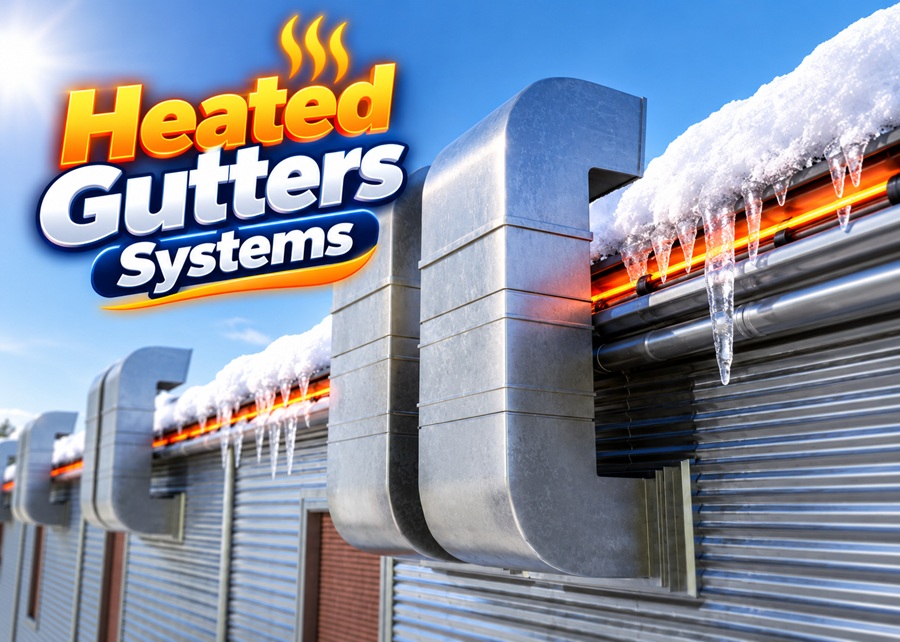
Winter weather can turn an ordinary gutter problem into a serious maintenance headache. Snow accumulates on the roof, temperatures rise slightly during the day, and melting water moves toward the eaves. When that water reaches a cold gutter or downspout, it can freeze and gradually create an obstruction. Ice buildup may add weight to the drainage system, produce large icicles, and prevent water from leaving the roof properly. In colder regions, heated gutters systems can help manage this problem by keeping selected drainage paths open during freezing conditions.
Most residential systems use electric heating cables installed in designated gutter sections, downspouts, or approved roof-edge areas. The cables generate heat that helps melt localized ice and allows water to continue draining. However, heated gutters are not a universal solution for every winter roofing problem. They cannot repair damaged gutters, replace proper insulation, or guarantee that ice dams will never develop. Before purchasing a system, it is important to understand why ice forms, how heating cables work, what installation involves, and how much ongoing operation may cost.
Heated Gutters Systems at a Glance
| Feature | Details |
|---|---|
| Main purpose | Help maintain drainage through selected areas during freezing weather |
| Common technology | Electric heating cables |
| Typical applications | Gutters, downspouts, and approved roof-edge areas |
| Main benefit | Helps reduce localized ice blockage |
| Important limitation | Does not fix every cause of ice dams |
| Operating cost | Depends on power consumption, electricity rates, and runtime |
| Installation concerns | Electrical protection, cable placement, and roof compatibility |
| Maintenance | Inspect cables, controls, gutters, and outlets before winter |
What Are Heated Gutters Systems?
Heated gutters systems use electrical heating elements to reduce ice accumulation in vulnerable drainage areas. In a typical installation, cables run through sections of the gutter and downspout. Some approved systems also extend along selected roof edges to help create a channel for meltwater.
When energized, the cables produce heat around their immediate surroundings. This can help prevent water from freezing completely at key points in the drainage route. The goal is not to melt all the snow on the roof but to preserve a path through which water can escape.
Products differ in their output, controls, installation requirements, and intended applications. Some cables provide a relatively consistent heat output, while self-regulating cables adjust output according to local temperature conditions. Self-regulating does not necessarily mean the system switches itself off automatically, so the controls must be checked separately.
A suitable design considers the roof shape, gutter material, downspout arrangement, electrical supply, and locations where ice repeatedly develops. Installing a random length of cable may consume electricity without solving the actual problem.
Why Do Gutters Freeze?
Gutters freeze when water remains in the drainage system long enough for temperatures to turn it into ice. Snow can melt on a relatively warm roof surface, travel toward the eaves, and refreeze when it reaches colder metal gutters or shaded sections.
Debris makes the situation worse. Leaves, twigs, and roof grit can restrict water flow, allowing water to collect in the gutter. Poor slope or blocked downspouts may create similar problems.
Ice dams are related but involve a different mechanism. Heat escaping into the roof space can warm areas beneath the snow, causing snow to melt. The resulting water moves toward colder eaves and refreezes, gradually creating an ice barrier. Water can then accumulate behind the barrier and, under certain conditions, move beneath the roofing material.
Heating cables may help maintain a drainage channel in treated areas, but they do not correct the heat loss that contributes to ice dams. Air sealing, insulation, ventilation, and appropriate roof construction remain important parts of winter maintenance.
Types of Heated Gutter Systems
Electric Heating Cables
Electric heating cables are a common solution for residential gutter heating. They are installed in designated sections according to the manufacturer’s instructions.
Cable routing is important. The layout must provide the intended coverage without creating prohibited overlaps, unsafe contact, or damage to the roof covering. Use only products approved for the specific application.
Self-Regulating Cables
Self-regulating cables are designed to adjust their heat output in response to local temperature conditions. This may help manage energy use when different parts of the cable experience different temperatures.
Their consumption still depends on cable length, weather, controls, and operating time. They are not automatically the cheapest choice for every property.
Thermostat-Controlled Systems
Thermostats and other control devices can help operate heating cables under appropriate conditions. Some systems use temperature sensors, while more advanced arrangements may also consider moisture.
Suitable controls can reduce unnecessary operation, but poor sensor placement or incorrect settings may cause the system to run at the wrong time. Follow the manufacturer’s instructions when selecting and configuring controls.
Benefits of Heated Gutters Systems
Maintaining a Drainage Path
The main advantage is helping preserve an open route for meltwater through selected gutter and downspout sections. This can be useful when ice repeatedly obstructs the same drainage areas.
A heated system may also reduce certain ice-related problems around treated sections. However, it cannot guarantee that all icicles or ice formations will disappear, especially during severe or prolonged freezing weather.
Reducing Certain Types of Damage
Heavy ice can add weight to gutters, stress hangers, and contribute to damaged joints or sagging sections. Overflowing water may also freeze on walkways or near entrances.
Heating cables may reduce these risks when the underlying issue is localized icing and the system is correctly designed. They do not replace routine cleaning, structural repairs, or safe winter property management.
Targeting Problem Areas
Some homes experience recurring icing at particular roof edges, valleys, or downspout outlets. A targeted heating installation may be appropriate after the cause has been investigated.
If a downspout is blocked by debris or a gutter has the wrong slope, correcting that defect may be more effective than installing heating cables. Identify the cause before spending money on equipment.
How Much Do Heated Gutters Systems Cost?
The total price depends on cable length, product type, controls, electrical work, roof access, and installation complexity. A short run on an accessible building will usually cost less than a multi-story property with several roof sections and long downspouts.
For broad planning, a small DIY-oriented cable setup may cost tens to several hundred dollars in materials. Larger systems and professional installations may cost several hundred to several thousand dollars. These are illustrative estimates, not current local quotes.
| Cost factor | Budget impact |
|---|---|
| Cable length | More coverage requires more material |
| Cable type | Specialized or self-regulating products may cost more |
| Controls | Thermostats and sensors add equipment costs |
| Electrical work | New circuits or modifications may require qualified labor |
| Roof access | Difficult access increases installation time |
| Existing defects | Damaged gutters may need repair first |
| Operating hours | Longer runtime increases electricity consumption |
To estimate energy costs, multiply the system’s power in kilowatts by the number of operating hours, then multiply the result by your electricity price. Actual consumption depends on the product, controls, and weather.
Installation and Electrical Safety
Heated gutter systems operate in wet, icy environments, so electrical safety is essential. Products must be approved for their intended application and installed according to the manufacturer’s instructions and applicable electrical requirements.
A qualified installer should assess cable routing, power supply, protective devices, controls, and compatibility with the roof and gutter materials. Improvised wiring and unsuitable extension cords are not substitutes for an appropriate permanent installation.
Never attach cables in ways that damage roofing materials or obstruct normal drainage. Avoid crossing or overlapping cables unless the product specifically permits it. Follow the required spacing, fastening methods, and installation temperature limits.
Inspect the system before winter and arrange professional service if cables are damaged or controls malfunction. Do not handle exposed conductors or electrical connections in wet conditions.
Maintenance Tips Before Winter
Clean gutters and downspouts before freezing weather arrives. Remove leaves and debris, inspect joints and hangers, and make sure water can drain freely. Heating cables cannot compensate for a gutter that is structurally damaged or badly blocked.
Check accessible cables and controls according to the manufacturer’s guidance. Look for visible damage, loose mounting points, or sections that have shifted. Never climb onto an icy roof to perform an inspection.
Keep records of the cable model, installation layout, and warranty details. If the system repeatedly fails to prevent icing in the same location, have the design assessed instead of adding improvised cable loops.
Conclusion
Heated gutters systems can help reduce localized ice buildup by maintaining a drainage path through selected gutters and downspouts. They may be useful for homes with recurring winter icing, but they do not eliminate every ice dam or correct underlying roof and insulation problems.
Start by identifying why the ice develops, then choose a product designed for the intended application. Compare installation costs, electrical requirements, controls, and energy consumption before making a decision.
Combined with clean gutters, suitable roof construction, and regular inspections, a correctly installed heating system can form part of a practical winter maintenance plan.
Frequently Asked Questions
1. Do heated gutter systems work?
They can help keep selected drainage paths open by melting or preventing localized ice accumulation. Results depend on correct installation, weather conditions, and drainage design.
2. How much do heated gutter systems cost?
Small systems may cost tens to several hundred dollars in materials, while extensive professionally installed systems can cost much more. Cable length, controls, electrical work, and roof access influence the total.
3. Do heated gutters prevent ice dams?
They may help with localized icing but do not correct the heat loss that often contributes to ice dams. Insulation, air sealing, and appropriate roof construction remain important.
4. Can I install heating cables myself?
Some products are intended for specific DIY applications, but electrical safety and roof access are major concerns. Follow the manufacturer’s instructions and use qualified professionals when required.
5. Do heated gutters use much electricity?
Consumption depends on cable length, power output, controls, and operating hours. Use the product specifications and your local electricity rate to estimate running costs.