Smart home energy management is the use of connected devices and systems to monitor, control, and reduce a home’s energy use automatically chiefly through smart thermostats, whole-home energy monitors, smart plugs and switches, and integration with solar panels, home batteries, and EV charging. In short, it does three things: it shows you where your energy is going, it automates devices so they use less, and it shifts usage to cheaper or cleaner times all of which add up to lower bills and less waste without you having to think about it.
Most households have no real idea where their power actually goes the bill arrives, and that is that. Smart energy management replaces that guesswork with visibility and control, turning a home from a passive consumer of energy into one that actively manages it. The payoff is both financial and environmental, and once it is set up, the great majority of it runs quietly on autopilot.
| Attribute | Detail |
| What it is | Using smart tech to monitor and cut energy use |
| Core devices | Smart thermostat, energy monitor, smart plugs |
| How it saves | Monitoring, automation, and shifting usage |
| Integrates with | Solar panels, home batteries, EV chargers |
| Main benefits | Lower bills, less waste, cleaner usage |
| Control via | App, voice, schedules, and automations |
| Best for | Anyone wanting to cut their energy costs |
What is smart home energy management?
At its simplest, it is the layer of technology that lets a home understand and manage its own power use. Instead of appliances and systems each running blindly, connected devices report how much energy they use, respond to schedules and rules, and coordinate so the home runs efficiently as a whole. It ranges from a single smart thermostat right up to a fully integrated system tying together solar, a battery, and an EV charger.
The thread running through all of it is information plus control. Knowing where the energy goes is only half the battle; being able to act on that knowledge automatically dimming, scheduling, shifting, switching off is what actually moves the bill. The difference from simply trying to use less by willpower is that a smart system makes the efficient choice the default, so you save even on the days you are too busy or distracted to think about it at all.
The core devices
| Device | What it does |
| Smart thermostat | Optimizes heating and cooling the biggest load |
| Whole-home energy monitor | Tracks real-time usage by circuit or device |
| Smart plugs & switches | Control and schedule individual devices |
| Smart lighting | Efficient LEDs plus schedules and dimming |
| Solar + battery | Generate and store your own power |
| Smart EV charger | Charge at the cheapest, cleanest times |
| Smart appliances | Run on schedules and off-peak |
How it actually saves energy
- Shows real-time usage so you can see and cut waste
- Automates heating and cooling around your actual schedule
- Switches off idle devices and silent standby loads
- Shifts heavy use to cheaper off-peak hours
- Stores solar power to use when you need it most
- Flags unusual spikes before they quietly cost you money
Energy monitoring: seeing where power goes
You cannot manage what you cannot see, which is why monitoring is the foundation of the whole approach. A whole-home energy monitor installed at the electrical panel, or the usage data from smart devices, turns an abstract monthly bill into a live, itemized picture of consumption. Suddenly you can see that the old second fridge in the garage is an energy hog, or that something is drawing power overnight that shouldn’t be. That visibility alone often changes behavior and trims the bill before any automation is added. Many monitors also break usage down over time, so you can compare months, spot seasonal patterns, and see the effect of a change you made which turns energy saving from guesswork into something you can actually measure and improve.
Automations that cut energy use
The real savings come when the home acts on its own, without relying on anyone to remember. A few simple, high-impact automations do most of the work.
- The thermostat eases back heating or cooling when the house is empty
- Lights and non-essential devices switch off at night or in away mode
- The EV and major appliances run during off-peak or solar hours
- Standby devices on smart plugs cut power once they go idle
- Blinds or shades adjust to reduce heating and cooling load
Integrating solar, batteries, and EVs
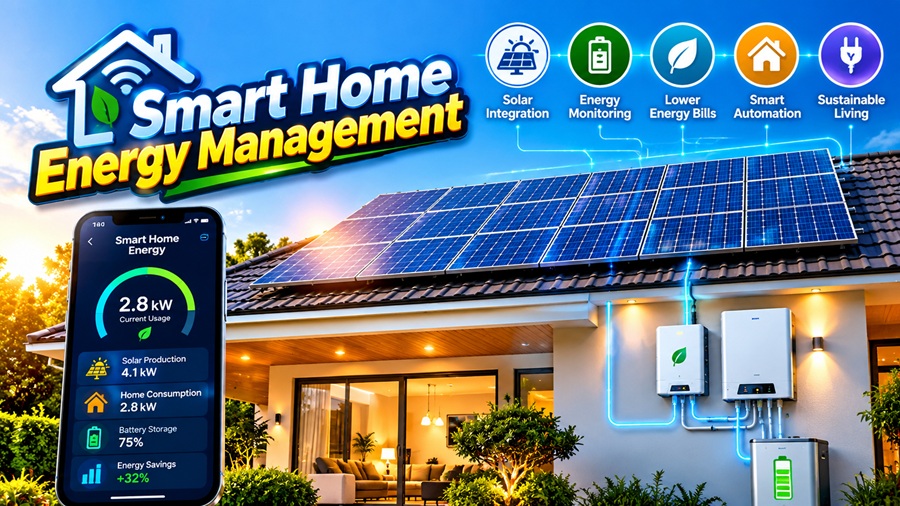
For homes with solar panels, a battery, or an electric vehicle, this is where the largest gains live. A smart energy system ties generation, storage, and big loads together: using solar power directly as it is produced, storing any surplus in a home battery rather than sending it cheaply to the grid, and charging the EV when power is cheapest or greenest. Coordinated well, these turn a home from a simple energy buyer into something closer to its own small, self-balancing power system. An EV is a particularly good example: because a car usually sits parked for hours, a smart charger can wait for the cheapest overnight rates or the midday solar peak rather than drawing expensive power the moment you plug in often cutting the cost of charging dramatically for exactly the same miles.
Shifting usage to cheaper times
Many utilities now charge different rates through the day, with power costing more at peak times and less overnight or midday. A smart system takes advantage of this by shifting flexible, heavy loads laundry, the dishwasher, EV charging, pre-cooling the house into the cheaper windows automatically. Some utilities also run demand-response programs that reward customers for cutting use during peak events, and smart devices can take part in these hands-free, trimming the bill further without any day-to-day effort from you.
The benefits
- Lower energy bills through less waste and smarter timing
- A clear, real-time picture of where your power goes
- A smaller environmental footprint and cleaner energy use
- More value from any solar panels or home battery
- Convenience the savings run automatically once set up
- Early warning of faults or unusually high consumption
How to get started
- Start by measuring add a smart thermostat and/or a whole-home energy monitor.
- Target the biggest loads first: heating and cooling, water heating, and any EV.
- Add smart plugs and switches to control and schedule individual devices.
- Set a few simple automations, like away mode, night mode, and off-peak scheduling.
- If you have solar, a battery, or an EV, integrate them for the biggest gains.
- Review the data regularly and adjust your settings over time.
What to consider
A few honest caveats keep expectations realistic. There is an upfront cost to the devices, though they typically pay for themselves over time through lower bills. It pays to build within a single ecosystem so everything works together smoothly. And the savings genuinely vary with your home, your habits, and your local energy rates a time-of-use tariff, for instance, unlocks far more from load-shifting than a flat rate does. Above all, no gadget saves energy you do not act on; the tools provide the insight and the automation, but the habits and the setup still matter.
Common mistakes to avoid
| Mistake | Better approach |
| Buying gadgets with no monitoring | Start by measuring where power goes |
| Ignoring the biggest loads | Target heating, cooling, and EV first |
| Mixing clashing ecosystems | Build within one platform |
| Setting it and never reviewing | Check the data and refine over time |
| Expecting savings without automation | Automate away mode and off-peak use |
Frequently asked questions
What is smart home energy management?
Using connected devices smart thermostats, energy monitors, smart plugs, and solar or EV integration to monitor, control, and automatically reduce a home’s energy use.
Does smart energy management actually save money?
Yes, usually through less waste, automated control, and shifting usage to cheaper times, though the exact savings depend on your home, habits, and energy rates.
What device should I start with?
A smart thermostat and a whole-home energy monitor are the best first steps, since heating and cooling is the biggest load and monitoring shows where the rest goes.
Do I need solar to benefit?
No. Monitoring, a smart thermostat, smart plugs, and off-peak scheduling save energy on their own; solar and batteries simply add the biggest further gains.
Final thoughts
Smart home energy management turns a home that quietly leaks money and power into one that watches, controls, and optimizes itself. The recipe is straightforward: measure first so you can see where the energy goes, tackle the biggest loads like heating and cooling, automate the easy wins such as away mode and off-peak scheduling, and if you have them tie your solar, battery, and EV into one coordinated system. Build it within a single ecosystem, review the data now and then, and most of the savings will run on their own. It is one of the rare upgrades that is good for both your wallet and the planet at the same time.